[MS] Tsuba
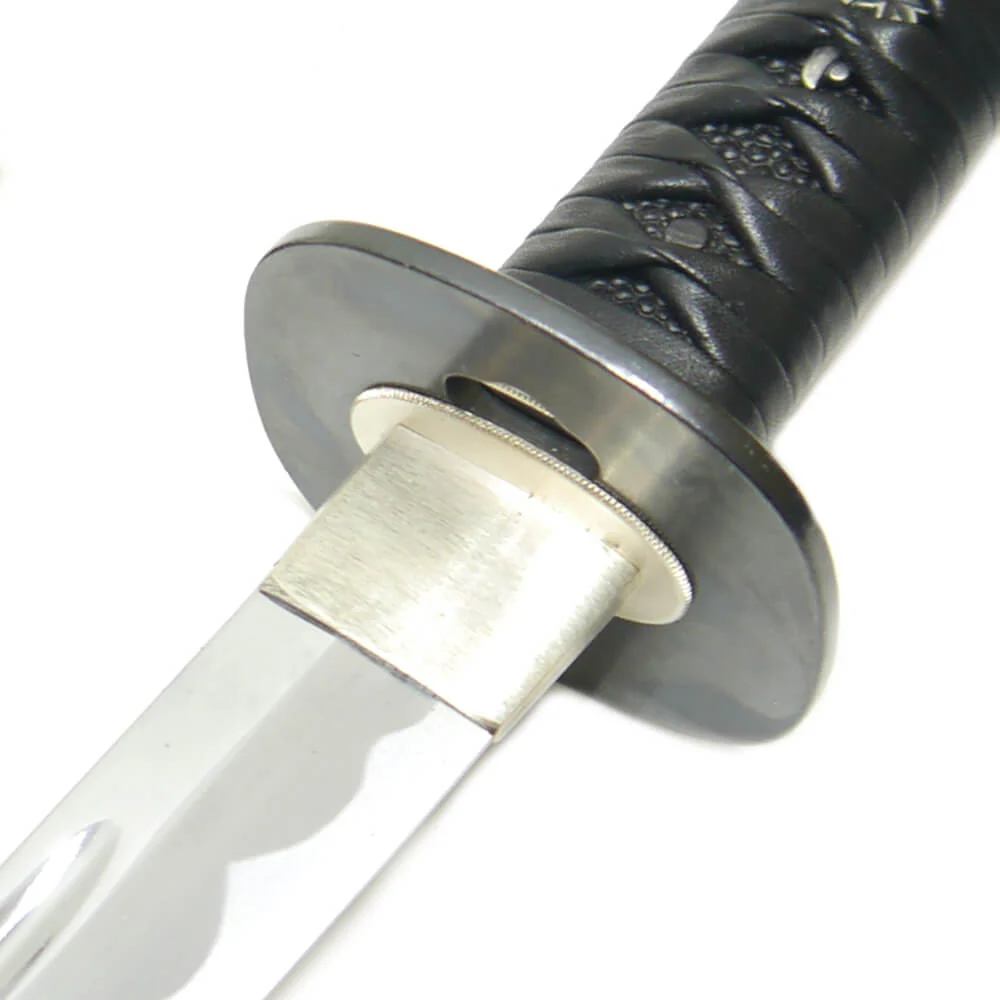
The Tsuba is the sword's guard. It has the function of protecting the hand from the opponent's blade but also from having one's hand sliding onto the blade during Tsuki (thrust) techniques.
However, it has two other qualities: aesthetics and balance adjustment. During the Edo period, the Tsuba turned progressively into a decorative ornament. It was often generously well made, giving every sword a personal and particular touch.
There can be one or two holes on the sides of the Tsuba. They were used to unsheathe the Kogatana (small knife) or Kogai (hairpin) that were fitted inside the sides of the Saya. Tsuba used to be made by entire dynasties of craftsmen who only specialized in that particular field; they have almost vanished in the present time.
The average weight of a standard Tsuba is 120 g.
A heavy Tsuba (> 120 g) will tend to shift the balance downwards the handle, making the Iaito easier to handle whereas a light Tsuba (< 120 g) will push the balance towards the Kissaki, the tip of the blade. The latter is recommended if you decide to focus on cutting training. You will find below some pictures of all our Tsuba but also details on size, material, and weight.
The Sukashi series, from TM031 to TM036 is a special series of widely opened Tsuba (called Sukashi). Made of blackened iron, they are coated by hand with a traditional lacquer.
Please note that the pictures above only display the front side of the Tsuba. You can find pictures of the reverse of each Tsuba on the dedicated product page.
Tsuba Technical Specifications
| Code Name |
Description | Material | Dimensions | Weight |
|---|---|---|---|---|
| TM001 Washi |
Eagle | Blackened iron | 75 mm x 70 mm x 4.1 mm | 136 g |
| TM002 Yagyu |
Name of a famous Samurai clan. Also called Kuruma Sukashi. | Blackened copper | 75 mm x 73 mm x 5.3 mm | 123 g |
| TM003 Shippo |
The 7 treasures (gold, silver, pearls, agate, crystal, coral, lapis lazuli) | Blackened iron | 74 mm x 70 mm x 4.1 mm | 135 g |
| TM004 Hanjiro |
Favored by the famous samurai Hanjiro. | Blackened copper | 79 mm x 65 mm x 6 mm | 142 g |
| TM005 Umetada |
Design by a famous blacksmith of the Edo period | Blackened iron | 84 mm x 75 mm x 4.3 mm | 150 g |
| TM006 Hyotan |
Gourd (calabash) | Blackened copper | 71 mm x 70 mm x 5 mm | 126 g |
| TM007 Musashi |
Used by the most famous of all samurai | Blackened copper | 74 mm x 74 mm x 7.1 mm | 146 g |
| TM008 Kasuga |
Kasuga refers to the shape of the Tsuba. | Blackened iron | 84 mm x 76 mm x 4.1 mm | 138 g |
| TM009 Ameryu |
Dragon under the rain | Blackened iron | 81 mm x 77 mm x 4.1 mm | 147 g |
| TM010 Namako |
Holothuroidea (sea cucumber) | Blackened iron | 74 mm x 69 mm x 4.1 mm | 90 g |
| TM011 Muji |
Plain (no pattern) | Blackened iron | 74 mm x 69 mm x 4.1 mm | 134 g |
| TM012 Kagecho |
Butterfly shadow | Blackened copper | 74 mm x 72 mm x 5 mm | 106 g |
| TM013 Nami |
Waves | Blackened iron | 81 mm x 77 mm x 4.1 mm | 145 g |
| TM014 Hirata |
Design by a famous blacksmith of the Edo period | Blackened copper | 76 mm x 72 mm x 4.5 mm | 120 g |
| TM015 Higo |
A famous design of the Higo province (now Kumamoto) | Blackened iron | 75 mm x 71 mm x 4.1 mm | 90 g |
| TM016 Shin Umetada |
Design by a famous blacksmith of the Edo period | Blackened iron | 85 mm x 76 mm x 4.1 mm | 165 g |
| TM017 Icho Zogan (Kasuga) |
Kasuga shape with silver ginkgo arabesque | Blackened iron | 84 mm x 77 mm x 4.1 mm | 141 g |
| TM018 Mitsuboshi Sansumi Sukashi |
Represents a constellation of 3 stars in triangle. This is also Minosaka's logo. | Blackened iron | 77 mm x 77 mm x 5 mm | 100 g |
| TM019 Mokko Namako Sukashi |
Namako (Holothuroidea) within a Mokko shape | Blackened iron | 72 mm x 75 mm x 5 mm | 110 g |
| TM020 Yatsushiro Kagecho Sukashi |
Copy of an ancient Tsuba made by master Yatsushiro. Represents the shadow of a butterfly. | Blackened Iron | 77 mm x 75 mm x 5 mm | 100 g |
| TM021 Shiho Namako Sukashi |
4 Holothuroidea (sea cucumber) | Blackened Iron | 79 mm x 74 mm x 5 mm | 115 g |
| TM022 Akasaka Musashino Sukashi |
Japanese pampas grass turned over after a storm, under a moon crescent | Blackened iron | 75 mm x 78 mm x 5 mm | 100 g |
| TM023 Hanamon Sukashi |
Flower petals - Famous Japanese crest | Blackened iron | 79 mm x 79 mm x 5 mm | 60 g |
| TM024 Yotsuwa Sukashi |
4 imbricated rings. | Blackened Iron | 72 mm x 73 mm x 5 mm | 90 g |
| TM025 Ouka Sukashi |
Represent a Sakura flower (cherry blossom). Also the lightest of all Tsuba. | Blackened Iron | 77 mm x 82 mm x 4.5 mm | 60 g |
| TM026 Owari Sukashi |
Tsuba made in the tradition of the Owari province (now Aichi prefecture). | Blackened Iron | 81 mm x 80 mm x 4.5 mm | 100 g |
| TM027 Kuyo Sukashi |
Features the symbolic 9 planets planets in the buddhism cosmogony. | Blackened Iron | 86 mm x 86 mm x 5 mm | 165 g |
| TM028 Kagi Sukashi |
Japanese hook symbol | Blackened iron | 83 mm x 83 mm x 5 mm | 100 g |
| TM029 Yatsu Warabite Sukashi |
8 Warabite (Japanese traditional symbol) | Blackened iron | 79 mm x 79 mm x 5 mm | 130 g |
Original: $96.00
-70%$96.00
$28.80Product Information
Product Information
Shipping & Returns
Shipping & Returns
Description
The Tsuba is the sword's guard. It has the function of protecting the hand from the opponent's blade but also from having one's hand sliding onto the blade during Tsuki (thrust) techniques.
However, it has two other qualities: aesthetics and balance adjustment. During the Edo period, the Tsuba turned progressively into a decorative ornament. It was often generously well made, giving every sword a personal and particular touch.
There can be one or two holes on the sides of the Tsuba. They were used to unsheathe the Kogatana (small knife) or Kogai (hairpin) that were fitted inside the sides of the Saya. Tsuba used to be made by entire dynasties of craftsmen who only specialized in that particular field; they have almost vanished in the present time.
The average weight of a standard Tsuba is 120 g.
A heavy Tsuba (> 120 g) will tend to shift the balance downwards the handle, making the Iaito easier to handle whereas a light Tsuba (< 120 g) will push the balance towards the Kissaki, the tip of the blade. The latter is recommended if you decide to focus on cutting training. You will find below some pictures of all our Tsuba but also details on size, material, and weight.
The Sukashi series, from TM031 to TM036 is a special series of widely opened Tsuba (called Sukashi). Made of blackened iron, they are coated by hand with a traditional lacquer.
Please note that the pictures above only display the front side of the Tsuba. You can find pictures of the reverse of each Tsuba on the dedicated product page.
Tsuba Technical Specifications
| Code Name |
Description | Material | Dimensions | Weight |
|---|---|---|---|---|
| TM001 Washi |
Eagle | Blackened iron | 75 mm x 70 mm x 4.1 mm | 136 g |
| TM002 Yagyu |
Name of a famous Samurai clan. Also called Kuruma Sukashi. | Blackened copper | 75 mm x 73 mm x 5.3 mm | 123 g |
| TM003 Shippo |
The 7 treasures (gold, silver, pearls, agate, crystal, coral, lapis lazuli) | Blackened iron | 74 mm x 70 mm x 4.1 mm | 135 g |
| TM004 Hanjiro |
Favored by the famous samurai Hanjiro. | Blackened copper | 79 mm x 65 mm x 6 mm | 142 g |
| TM005 Umetada |
Design by a famous blacksmith of the Edo period | Blackened iron | 84 mm x 75 mm x 4.3 mm | 150 g |
| TM006 Hyotan |
Gourd (calabash) | Blackened copper | 71 mm x 70 mm x 5 mm | 126 g |
| TM007 Musashi |
Used by the most famous of all samurai | Blackened copper | 74 mm x 74 mm x 7.1 mm | 146 g |
| TM008 Kasuga |
Kasuga refers to the shape of the Tsuba. | Blackened iron | 84 mm x 76 mm x 4.1 mm | 138 g |
| TM009 Ameryu |
Dragon under the rain | Blackened iron | 81 mm x 77 mm x 4.1 mm | 147 g |
| TM010 Namako |
Holothuroidea (sea cucumber) | Blackened iron | 74 mm x 69 mm x 4.1 mm | 90 g |
| TM011 Muji |
Plain (no pattern) | Blackened iron | 74 mm x 69 mm x 4.1 mm | 134 g |
| TM012 Kagecho |
Butterfly shadow | Blackened copper | 74 mm x 72 mm x 5 mm | 106 g |
| TM013 Nami |
Waves | Blackened iron | 81 mm x 77 mm x 4.1 mm | 145 g |
| TM014 Hirata |
Design by a famous blacksmith of the Edo period | Blackened copper | 76 mm x 72 mm x 4.5 mm | 120 g |
| TM015 Higo |
A famous design of the Higo province (now Kumamoto) | Blackened iron | 75 mm x 71 mm x 4.1 mm | 90 g |
| TM016 Shin Umetada |
Design by a famous blacksmith of the Edo period | Blackened iron | 85 mm x 76 mm x 4.1 mm | 165 g |
| TM017 Icho Zogan (Kasuga) |
Kasuga shape with silver ginkgo arabesque | Blackened iron | 84 mm x 77 mm x 4.1 mm | 141 g |
| TM018 Mitsuboshi Sansumi Sukashi |
Represents a constellation of 3 stars in triangle. This is also Minosaka's logo. | Blackened iron | 77 mm x 77 mm x 5 mm | 100 g |
| TM019 Mokko Namako Sukashi |
Namako (Holothuroidea) within a Mokko shape | Blackened iron | 72 mm x 75 mm x 5 mm | 110 g |
| TM020 Yatsushiro Kagecho Sukashi |
Copy of an ancient Tsuba made by master Yatsushiro. Represents the shadow of a butterfly. | Blackened Iron | 77 mm x 75 mm x 5 mm | 100 g |
| TM021 Shiho Namako Sukashi |
4 Holothuroidea (sea cucumber) | Blackened Iron | 79 mm x 74 mm x 5 mm | 115 g |
| TM022 Akasaka Musashino Sukashi |
Japanese pampas grass turned over after a storm, under a moon crescent | Blackened iron | 75 mm x 78 mm x 5 mm | 100 g |
| TM023 Hanamon Sukashi |
Flower petals - Famous Japanese crest | Blackened iron | 79 mm x 79 mm x 5 mm | 60 g |
| TM024 Yotsuwa Sukashi |
4 imbricated rings. | Blackened Iron | 72 mm x 73 mm x 5 mm | 90 g |
| TM025 Ouka Sukashi |
Represent a Sakura flower (cherry blossom). Also the lightest of all Tsuba. | Blackened Iron | 77 mm x 82 mm x 4.5 mm | 60 g |
| TM026 Owari Sukashi |
Tsuba made in the tradition of the Owari province (now Aichi prefecture). | Blackened Iron | 81 mm x 80 mm x 4.5 mm | 100 g |
| TM027 Kuyo Sukashi |
Features the symbolic 9 planets planets in the buddhism cosmogony. | Blackened Iron | 86 mm x 86 mm x 5 mm | 165 g |
| TM028 Kagi Sukashi |
Japanese hook symbol | Blackened iron | 83 mm x 83 mm x 5 mm | 100 g |
| TM029 Yatsu Warabite Sukashi |
8 Warabite (Japanese traditional symbol) | Blackened iron | 79 mm x 79 mm x 5 mm | 130 g |